Total Pageviews

Search This Blog

Saturday, August 4, 2012

Batman and Ironman

My readers are probably familiar with the popular American movies, "The Dark Knight Rises" and "Ironman".  Both of these movies have novel energy sources woven into their plots.

In "Ironman", Tony Stark and his flying suit are powered by a glowing ring device that produces vast amounts of energy.  

In the latest Batman movie, Bruce Wayne has a fusion reactor underneath the Hudson river that is only awaiting the final touches of a genius Russian nuclear physicist to make it work and produce limitless, clean power.  Of course, the device falls into the hands of the arch villain, who immediately weaponizes it.

How does movie land compare to reality?  Check this out:  A piece of thorium (an element, present since the creation of the universe) the size of this rock can provide all your energy needs for your entire life time.


 That's right, energy for your entire lifetime; transportation, domestic heating and cooling, domestic hot water, lighting and electricity.  Compare that with the truckloads of coal, oil and gas you would need for a lifetime. 

Thorium is a fairly abundant element, as common as lead and can be burned a a molten salt reactor.  These types of reactors offer substantial advantages over conventional light water reactors and yes, Virginia, even light water reactors have advantages over fossil fuels.

You can learn more about thorium molten salt reactors here.
 

Nigeria Tanker Truck Explosion

On July 12, 2012, over 120 people were killed in a horrific tanker truck accident in Nigeria.  Many of the victims were trying to collect gasoline from the wrecked tanker when it caught fire and exploded.  What a terrible loss of life! 

The victims were apparently trying to scoop up spilling fuel for their motorcycle taxis when the wrecked tanker truck exploded.  That is how desperate they are for energy.  

Why do I mention this? Not because I am insensitive to their plight, but because the number of dead exceeds the number killed in all commercial nuclear accidents since the first commercial nuclear power plant at Shippingport, Pennsylvania first went online and started producing electricity.  This includes the horrible nuclear accident at Chernobyl.  Below is a summary of the fatalities due to commercial nuclear power:

Fukushima Daiichi fatalities = 0 

How come we don't hear the hue and cry to abandon fossil fuel?  Yet that is what constantly assaults us regarding nuclear power. We must abandon nuclear power because of Fukushima, Chernobyl and Three Mile Island.  No, we must learn from Fukushima and build the molten salt reactors that were invented in the 1960s and get them on-line sooner!

(Aside:  I'm sure that you have all heard incredible numbers of people that supposedly died from the Chernobyl accident.  Those are theoretical deaths - deaths that supposedly occurred because of the radiation release assuming that the linear no threshold theory is correct.  It isn't correct.  For a good technical discussion on the incorrectness of the linear no threshold theory, click here.)

Sunday, June 24, 2012

1837

Let's pretend that we are on Jeopardy.  The year 1837 is the answer to what question?

"Why, Alex, What is the only year since the Constitution was adopted in which the Federal Government did not have a debt or run a deficit?"

 "So Alex, in the 223 years since the Constitution took effect, there has been only one year in which the Federal Government lived within its means?"  That's correct.

Now back to the real world. 

Doesn't that really put the whole balanced budget amendment and all other jawboning about federal deficits and debt into perspective?

As analogy, let's say that in 1789 an orphanage is opened in New York City, whose stated objective is to find homes for orphans and to place them for adoption.  Two hundred and twenty three years later, the orphanage is audited, where it is discovered that only 1 orphan was ever placed for adoption, and that was in 1837.  Would anyone believe the stated objective of the orphanage?

Think about that as we descend into the presidential election cycle!  Maybe it is time to pull out the Anti-Federalist papers and read them!

Sunday, June 17, 2012

Aerovee Service Bulletin

While doing the annual inspection on my Sonex aircraft, we discovered a service bulletin on the Aerovee engine.  The bulletin tells owners to remove the alternator plate on the rear of the engine and replace the 4 socket head cap screws that retain the alternator stator with longer screws that have a nylon patch on them.

The bulletin also states that if the longer socket head cap screws bottom out in the blind hole before fully clamping the stator, the hole must be drilled through and tapped.

Well, guess what, the screws bottomed out.  The whole operation was not hard, but taking the plate off the rear of the engine required taking a lot of things apart.  And I had to buy 25 screws on-line, when I only needed 4.

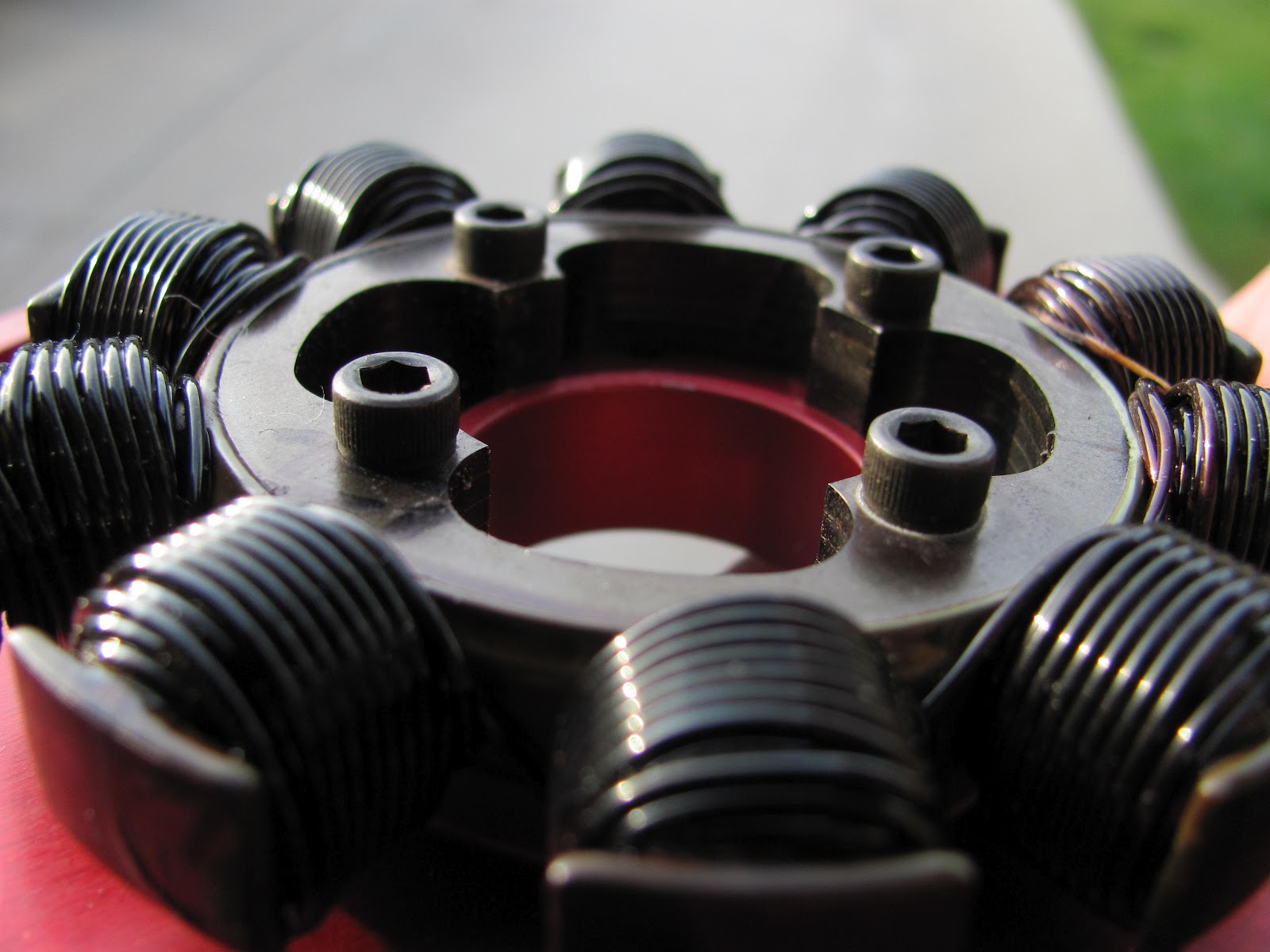
 This is the rear of the alternator adapter plate showing the 4 holes (with no red anodizing) that were drilled and tapped through to allow the new, longer screws to be installed from the other side.

 One of the 4 holes with the socket head cap screw.
 This is the new, longer screw with the nylon patch to prevent the screw from backing out.


Stator installed with the new, longer screws.

Tuesday, June 5, 2012

Molten Salt Thorium Reactors

Ralph Moir and Edward Teller (yes, that Edward Teller) wrote an excellent paper on molten salt reactor technology.  You can access it here.  Read, enjoy, and share with a friend.

Thursday, May 31, 2012

Cyclone of Fire 2

Recently, a colleague and I took a design of experiments class at work.  The following is the report of the project we did for the class.

Introduction

A fire whirl (also known as a fire devil or fire tornado) occurs when a whirlwind (also known as a dust devil) develops in the presence of a fire.  In such instances, the fire acquires a vertical vorticity and forms a whirl, or tornado-like vertically oriented column of fire. (1)  Fire whirls can be created in a laboratory setting using a turntable, a cylindrical screen, and a burner.  The cylindrical screen on the spinning turn table creates a vortex, and the burner provides the fire.  Compare pictures of a natural and laboratory fire whirl, below.

Figure 1: Natural Fire Whirl (1)


Figure 2:  Laboratory fire whirl

Objective
The objective of this experiment was to determine the factors that most influence fire whirl height.  The following two level factors were investigated: screen diameter (small/7” and large/10”); screen height (short/18” and tall/36”); screen material (aluminum and fiberglass); turn table speed (slow and fast); and burner lighter fluid brand (Kent’s/Western Family and Lowe’s/Kingsford).  These factors were investigated using a 5 factor / 1 block / 16 run Box, Hunter & Hunter designed experiment.  The test runs are summarized in Table 1, below.

Table 1:  Test runs for DOE
Set Up

The set up of this experiment consisted of assembling and constructing various items.  Three of the five factors were related to the cylindrical screens.  Each factor had two levels.  Thus, eight cylindrical screens of various diameters, heights, and materials were constructed and are shown in Figure 3, below.  Another factor was burner lighter fluid brand.  Two brands were investigated, so two burners were used.  Each burner consisted of lighter fluid soaked rolled corrugated cardboard positioned in a tin can.  One of the burners, two brands of lighter fluid, and burner snuffer are shown in Figure 4, below.  The complete test fixture, consisting of a wooden turntable with brackets securing a cylindrical screen and burner is show in Figure 5, below.  Flame height measurement was facilitated via a measuring tape positioned adjacent to the turntable, as show in Figure 6, below.

 
Figure 3:  Fiberglass (left) and aluminum (right) cylindrical screens
 of two heights and two diameters used in DOE

Figure 4:  Burner, two lighter fluids, and snuffer

Figure 5:  Turntable with cylindrical screen and burner installed
Figure 6:  Measuring tape installed next to cylindrical screen
Procedure

The test procedure was as follows:
1.                  Install the specified cylindrical screen on the turntable brackets
2.                  Charge the burner with the specified lighter fluid*
3.                  Install the burner in the turntable brackets
4.                  Light the burner
5.                  Spin the turntable at either fast or slow rates**
6.                  Measure the peak flame height three times by visual inspection***
7.                  Stop the turn table and snuff the burner

*It is noted that the burners were not recharged or charged equally for every test run.  The burners were initially charged with their respective lighter fluids, and then recharged only occasionally, between runs.  The burners were never exhausted, and the volume of fluid not controlled.

**The turntable was spun at either a fast or slow rate, as determined qualitatively by the operator.  One operator performed all the tests to reduce variation. 

***Flame height varied during burn time, even after the turntable spin rate seemed to achieve a steady state.  Peak flame height was record by visual inspection three times during the course of a test run.  Each measurement of a given test run was separated by a few seconds.

The fully assembled test fixed with lit burner on the stationary turntable is shown in Figure 7, below.  The same assembly with lit burner, but on the spinning turntable is shown in Figure 8, below.  Note the difference in flame shape and height.


Figure 7:  Stationary turntable with burning and cylindrical screen
Figure 8:  Spinning turntable with burning and cylindrical screen

Results

The results of the experiment are shown in Table 2, below.  Columns 6 through 8, labeled “Run1,” “Run2,” and “Run3,”correspond to the three height measurements (in inches) taken for a given test case.  The median of the three “runs” is shown in column 9.

Table 2:  DOE Results

Statistical Analysis

A statistical analysis of the data was performed to determine the significance of the various factors.  Since each test case was only run once (subgroup size of one), A Priori Pooling is used to separate signals from noise.  Using this method, some of the contrasts are combined in order to obtain a Mean Square Error (Within) term. (2)  The signs of each confounding group are shown in Table 3, below.  Because the subgroup size equals one, no interactions were used.

Table 3:  Correlation matrix
The estimated contrast effects are shown in Table 4, below.  As can be seen, all of the p values are much larger than 0.05, suggesting none of the effects are significant.

Table 4:  Effect estimates

An ANOVA table is presented in Table 5, below.  This table presents much of the same information as the previous table.  As with the previous table, the p values for the various factors are listed.  All p values are much larger than the threshold 0.05 value, indicating none of the factors are significant.

Table 5:  ANOVA table
A normal probability plot of the estimated contrast effects is shown in Figure 9, below.  A normal probability plot is used to make a relative comparison.  Instead of plotting the sum of squares values, a normal probability plot plots the estimated contrast effects.  These effects are computed for every contrast, arranged in rank order, and plotted versus the appropriate percentages on a normal probability chart.  Normal probability plots have the property that a random sample drawn from a normal distribution will yield a straight line, more or less. (2)  Thus, the fact that the data point for this experiment fall more or less in a straight line suggests none of the effects are significant.

Figure 9:  Normal probability plot of effects


A scree plot for this experiment is shown in Figure 10, below.  A scree plot plots the sum of squares for each contrast in descending order of magnitude, and connects these points to form the profile of a cliff.  (In the chart, below, the cliff is rotated 90°.)  A significant effect would be much taller than the noise.  In this case, none of the factors stand out significantly, and all fall below the p=0.05 criterion for significance.
Figure 10:  Scree plot of the effects
Discussion

This statistical analysis of the experimental data suggests that none of the factors have a significant effect on flame height.  While cylindrical screen height and turntable rotation speed came closest to being significant factors, both failed to meet the p=0.05 criterion.  Thus, one could conclude that flame height is a function of some other factor, or that the experiment was flawed.  Possible flaws in the experiment include flame height measurement technique, burner lighter fluid charging, turn table speed, and subgroup size.  These items are discussed below.

Flame Height Measurement
Flame height, the measured response of the system, was determined by visual inspection.  Inasmuch as the flame height fluctuated widely and rapidly during burn time, employing a videographic system to capture and assess peak flame height would improve the fidelity of the measurement.  Also, decreasing the ambient light during the test period may improve the measurements.

Burner Lighter Fluid Charging
In retrospect, it is hypothesized that the amount of available lighter fluid in the burner is a significant factor in flame height.  The significance of all other factors could be masked or confounded due to this single uncontrolled factor.  Weighing each burner before each test run to verify the initial mass / amount of available fuel is the same every time, would have allowed for a true study of the significance of lighter fluid, as well as improved the fidelity of the other data. 

Turntable Speed
The turntable was manually spun at either “fast” or “slow” rates, per the test matrix, with rates gauged qualitatively by the operator.  While there was an observable difference between the two spin rates, employing a mechanical system to spin the turntable in a repeatable and steady manner may increase the ability to determine the significance of this factor.

Increasing Subgroup Size
A subgroup size of one was used for this experiment to minimize the total number of runs.  However, because there was only one observation per test, 2- and 3-way interactions were not assessed.  Adding additional observations would allow for the affects of interactions to be estimated.

Addressing these or other flaws in the experiment could result in an improved understanding of the factors that impact flame height.  Additionally, other factors could be included in the experiment.  The computational work of Battaglia et al. (3) and others could be queried for additional insights on key factors.  While our experiments failed to reveal the key factors, others have, experimentally, computationally, or otherwise, determined design parameters such that fire whirls are available commercially, as discussed in the following section. 

Commercial Fire Whirls

Fire whirls are marketed commercially as patio heaters and displays.  Some of the commercially available fire whirls are driven by electric exhaust fans while others are naturally aspirated.  Most produce the fire whirl within tubes of borosilicate glass.  See the images, below for examples of the commercially available fire whirls.
 Figure 11: Lava Heat fire whirl (4)


Figure 12: Vortex Fires fire whirl (5)

Works Cited
1. Fire whirl. Wikipedia. [Online] April 2, 2012. [Cited: April 10, 2012.] http://en.wikipedia.org/wiki/Fire_whirl.
2. Wheeler, Donald J. Understanding Industrial Experimentation. Knoxville : SPC Press, Inc., 1990. ISBN 0-945320-09-4.
3. Fire Whirl Simulations. Battaglia, Francine, et al. Gaithersburg : NIST United States Department of Commerce Technology Administration, 1998. http://fire.nist.gov/bfrlpubs/fire98/art079.html. NISTIR 6242.
4. Starfire Direct. Lava Heat Patio Heater. Starfire Direct. [Online] 2012. [Cited: April 10, 2012.] http://www.starfiredirect.com/lava-heat-patio-heater-p-965.html.
5. Moderustic Inc. Home. Moderustic Vortex Fires. [Online] 2011. [Cited: April 10, 2012.] http://www.vortexfires.com/Home.html.

Wednesday, May 30, 2012

Financial Chernobyl

Can Bernanke Scram in Time?  That is the question.

I like commercial, peaceful nuclear reactors and I also like money.  But today, I want to compare the Chernobyl reactor disaster with the disaster that Ben Bernanke is continuing to prepare at the Federal Reserve Bank.  I am going to make an analogy between what happened at the Chernobyl nuclear power plant and what could possibly happen to the economy due to the experiments that Ben is conducting at the Federal Reserve.

Like all analogies, they only go so far.  But hear me out and I think you might get what I am suggesting.  

Engineers at the Chernobyl power plant wanted to conduct an experiment to see how long one of the turbines could continue to power the coolant pumps to the reactor after the steam was shut off to the turbine.  The experiment was scheduled for the afternoon of January 25th, 1986, but continuing electrical demand forced the plant manager to postpone the test for 9 hours.

The plan was to stabilize the power output from the reactor at 700 - 1000 megawatts thermal (MWt).  However, due to an error the reactor output dropped to 30 MWt.  The operators disabled some of the safety systems and withdrew the control rods and some of the manual control rods to get the reactor back to 200 MWt.  Xenon, a fission product created in the reactor, was working against them, since it absorbs neutrons that support the nuclear chain reaction.  

In this condition, the RBMK reactor was dangerously unstable, as events proved.  The operators were apparently ignorant of this.

The test commenced at this point with the turbine powering the coolant pumps.  As the turbine lost momentum, the water pressure in the coolant circuit decreased.  This, coupled with the positive void coefficient of the RBMK reactor caused a dramatic increase in the power level.  Thirty six seconds later the operators hit the scram button.

 (Aside: The scram button is an emergency control that is designed to quickly cause all the control rods to be inserted into the reactor and stop the fissioning of the fuel.  The control rods absorb the neutrons that are causing the chain reaction in the nuclear fuel, thus stopping the reactor.)

The act of inserting the controls may have also caused the power of the reactor to rapidly increase, since the bottom of the rods was actually graphite, which displaced the water in the reactor and increased the reactivity in the reactor.

In either case, the control rods never made it very far into the reactor.  As the power soared, the fuel channels were damaged by the increasing heat and the reactor lid was dislodged, preventing the insertion of the rods.  Steam and hydrogen explosions quickly followed, which along with an ensuing fire, dispersed tons of reactor fuel into the environment.

You can read a detailed blow by blow of the accident here.

Here is my analogy:

I suggest to my readers that Ben Bernanke is conducting an impromptu experiment with the economy analogous to the disastrous Chernobyl experiment of 26 years ago.

The economy is stuck at low levels, just like the RBMK reactor was stuck at low power levels by the neutron absorbing Xenon.  The economy is stuck at low levels by Obama-care, zillions of regulations and other constant interventions into the operation of the free market, including a fundamentally flawed fractional reserve banking system. (Krazy Keynesians, including Ben Bernanke, rule the economic roost.)

Ben is pulling out all the control rods, including the manual control rods to try to get the economy going again.  QE1, QE2, and QE3 are the control rods along with a hundred other ways Ben is creating liquidity and providing funds (creating money, ex-nihilo, out of nothing) for stimulus spending.

Because of this, the economy is operating in a dangerously unstable regime, just like Chernobyl on that fateful day in 1986.  Since 2008, Ben has increased the FED's balance sheet from about $900 billion to $2.8 trillion, with still not much economic output.  He is waiting for signs in the uptick of the economy, just like the Chernobyl operators watched for reactor power increases.

He says he can unwind the position of the FED, but he might find out, just like the operators did at Chernobyl, that his goose is already cooked.  Indeed, it is possible that the very act of scramming the reactor was the most proximate cause of the disaster.  Maybe Ben will find out that the very act of unwinding the liquidity causes a financial Chernobyl style meltdown? 


Regardless, Ben thinks he can control this financial experiment and manipulate the economy so it does what he wants.  This is what is known as "Fatal Conceit". 

This is what Gary North says about Ben's experiment"  

We know that the Federal Reserve has tripled the monetary base. The only thing that is keeping the monetary base from being converted into rising prices is the fact that commercial banks still are not lending. Instead, they hold approximately $1.7 trillion as excess reserves at the Federal Reserve. Bankers remained frightened of the recovery, so they are content to receive an interest rate of one quarter of one percent per annum on excess reserves.

The financial disaster is primed and waiting for reality.  

Most likely, the controls rods cannot be inserted in time to stop the reaction.  The reactor is probably already damaged before the scram button is ever activated.  Ben, beware of the scram button!


(Aside: The RBMK was a bad reactor design from the beginning, just like the Federal Reserve Banking System is a bad banking system, from the beginning.  That doesn't mean that there are not reliable, clean, and inherently safe nuclear reactors, like the LFTR, or that there are not honest, good monetary and banking systems, like Honest Money and the Gold Standard.  End Aside)